Crypto Compliance, AML & Blockchain Forensics: Career & Hiring Guide

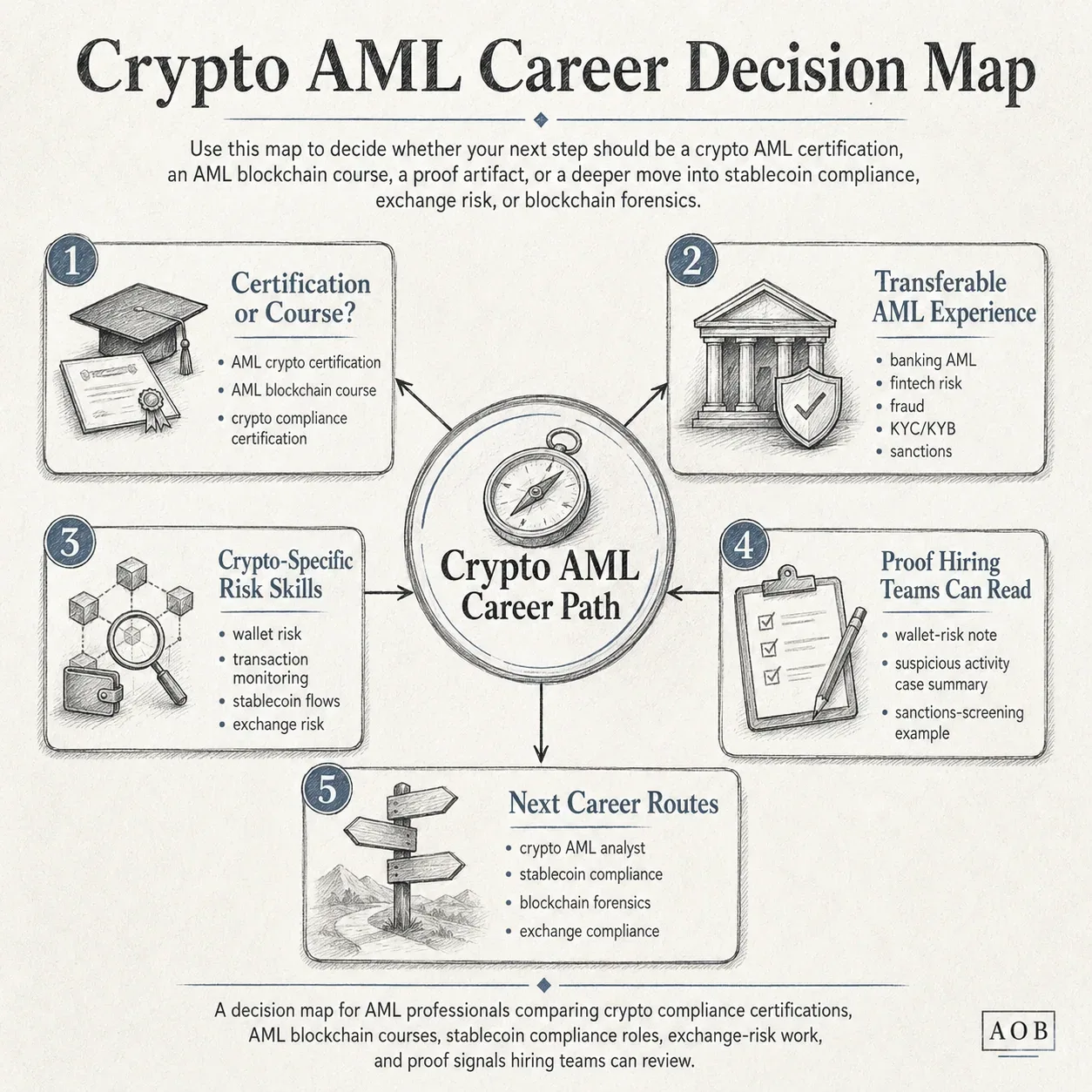
Moving from traditional finance or cybersecurity into crypto compliance is rarely a 1:1 lateral move. Hiring managers at exchanges, stablecoin issuers, and forensics firms look for very specific operational signals depending on whether they are hiring for high-volume transaction monitoring or on-chain fraud investigations.
This directory maps out how different compliance backgrounds translate into Web3 roles, what artifacts hiring teams actually evaluate, and where to start based on your current skill set.
Core Hubs & Industry Blueprints:
Before diving into specific roles, review our specialized sub-hubs and market playbooks:
AML & Exchange Operations:
Crypto AML Analyst Career Hub: Certifications, Stablecoin & Exchange Risk
Forensics & Investigations: Blockchain Forensics Career Hub: Fraud, Wallet Risk & Evidence
Market Overview:
Web3 Compliance, RWA, Stablecoins, CBDCs, and Forensics Careers Guide
Career Pathways & Transition Maps
Transaction Monitoring & Core AML
If your background is in KYC/KYB screening, SAR filing, or high-volume transaction monitoring, your biggest hurdle isn't learning compliance theory—it's showing you understand how on-chain hops and mixer interactions alter financial crime typologies.
Certification Reality Check: Best AML Certification for Crypto Compliance Analyst Roles — Do Certifications Actually Help You Get Hired?
Market Outlook & Pay Scales: Blockchain Compliance Careers (2026): Skills, Roles, Salaries & Market Outlook
Stablecoin Issuance & Exchange Operations
Working inside an exchange or payment gateway means handling fiat-to-token ramps, counterparty risk, and rapid Travel Rule compliance.
Transition Guide:
Can AML Analysts Move Into Stablecoin or Crypto Exchange Compliance Jobs?
Sector Analysis:
Web3 Compliance, RWA, Stablecoin, CBDC, and Forensics Careers
On-Chain Forensics & Fraud Investigations
Law enforcement liaisons, fraud investigators, and cybersecurity analysts usually transition fastest into forensics. The focus here shifts away from policy writing and toward wallet clustering, tracing tainted funds, and preparing court-ready evidence dossiers.
From Banking Fraud to Forensics:
From Finance Fraud Investigations to Blockchain Forensics Careers: Can Banking Experience Transfer?
Getting Hired at Web3 Startups:
How to Start a Career in Blockchain Forensics at a US Startup
RWA Tokenization & Institutional Infrastructure
As traditional institutions tokenize credit, treasuries, and real estate, compliance teams must balance standard securities reporting with smart-contract-level permissioning and custody controls.
RWA Skill Requirements: RWA Tokenization Jobs: What Skills Are Actually Needed?
Central Bank Digital Currencies: Career Opportunities in CBDCs: Tech Stacks and Compliance Roles
What Actually Proves Your Value to a Web3 Hiring Team?
Most failed applications from traditional banking analysts stumble on the same issue: their CVs list generic compliance duties without demonstrating blockchain literacy.
Hiring managers want tangible artifacts:
1. A Wallet Triage Teardown: A 1-page sample showing how you investigate a flagged transaction, trace hops across a block explorer, and document counterparty risk.
2. Policy Translation: A memo explaining how an operational change (like MiCA or FATF Travel Rule updates) impacts cross-border stablecoin liquidity.
3. Investigation Summaries: Sanitized summaries of how you handled fraud or sanctions escalations, framed with crypto-specific risk terminology
If your resume still reads like a retail banking job description, have our team review it:
CV Review: Web3 Compliance CV Review Service
Live Openings: Browse Curated Web3 Compliance & Risk Roles
Scope & Target Audience
Built For: Traditional AML analysts, fraud investigators, audit leads, cybersecurity analysts, and legal ops specialists evaluating Web3 roles.
Not Covered: This hub does not provide legal advice, statutory regulatory interpretations, or generalized developer career roadmaps.
Frequently Asked Questions
Does traditional banking AML experience carry weight in Web3?
Yes, but only if you translate it. Knowing standard KYC regulations is expected; what sets candidates apart is understanding how decentralized protocols, unhosted wallets, and bridge transactions change investigation workflows.
Do you need to know how to code to work in blockchain forensics?
No. While Python and SQL help at senior levels, entry-to-mid-level forensics roles prioritize investigative intuition, visual wallet mapping (using tools like Chainalysis, TRM, or open block explorers), and rigorous case documentation.
What is the fastest way to stand out when applying to crypto exchanges?
Bring a teardown of a real on-chain transaction monitoring scenario to the interview. Showing a hiring manager how you assess wallet risk in real-time is 10x more persuasive than listing an ACAMS certificate on its own.
About the Author
Curated by Shubhada Pande, founder of ArtOfBlockchain.club. This guide reflects real hiring data, recruiter briefs, and candidate case studies from the AOB Web3 talent network.
Connect on LinkedIn: Shubhada Pande